
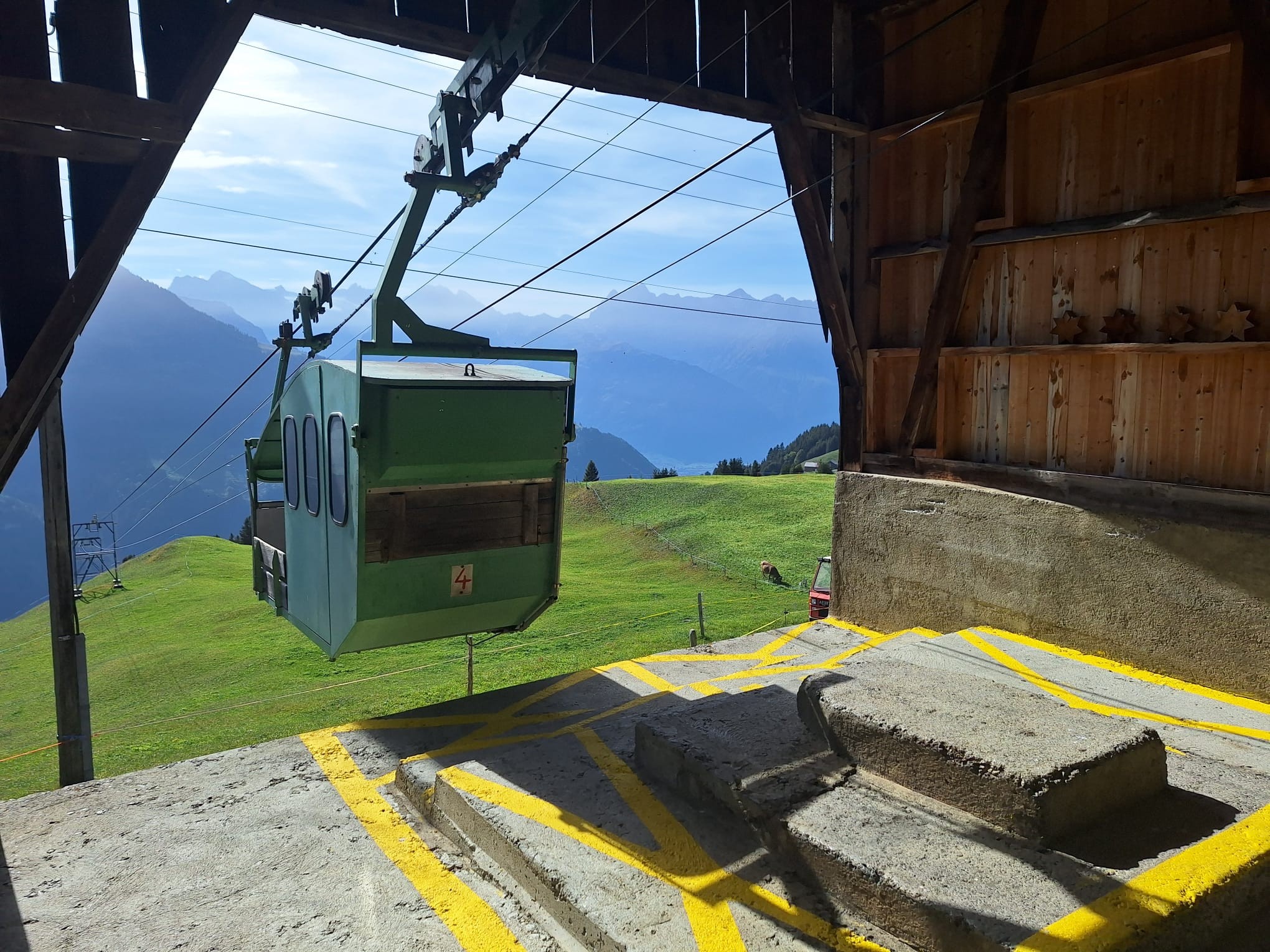
Last week, the Uri Institute Cultures of the Alps continued its annual «Urner Gene» event series with a themed evening titled «Üüfä + appä, Schiffli, Höhenrausch.» The evening in the Uristier Hall was dedicated to Uri’s cable cars, of which there are a remarkable 51 active systems (including ski lifts, excluding the Andermatt-Sedrun line). Of these, two cable cars have a federal concession and provide access to land, 13 are of tourist significance, and 30 serve an agricultural access function.
This enormous diversity also brings with it a variety of challenges and problems; small cable cars, in particular, are facing ever-increasing safety and technical requirements. Their financial resources are often limited, and with the expansion of road networks, they are becoming less and less important – even to the locals. Mike Bacher, mayor of Engelberg and an expert on Swiss cable car law, opened the evening by discussing the decades-long struggle of the cantons of Central Switzerland against federal authority over licensing. Cable car expert Reto Canale then highlighted the importance – particularly of small cable cars – as cultural assets and opportunities for sustainable tourism. The event concluded with a musical and literary performance by composer Michel Roth – who, some time ago, explored the «singing cables» of the Schächental railways in a sound project – and author Jörg Meier, whose tragicomic novel «Solo für Bottlang», traps two completely different men in a cramped «Niederberg» cable car, forcing them to spend the night together high above the abyss amid a stormy Föhn wind.
Before that, we were able to explore the quaint Spiringen-Chipfen-Tristel aerial tramway with Kilian Gasser, secretary of the cable car cooperative, and discuss the current situation.
Published on 05. October 2026
Back